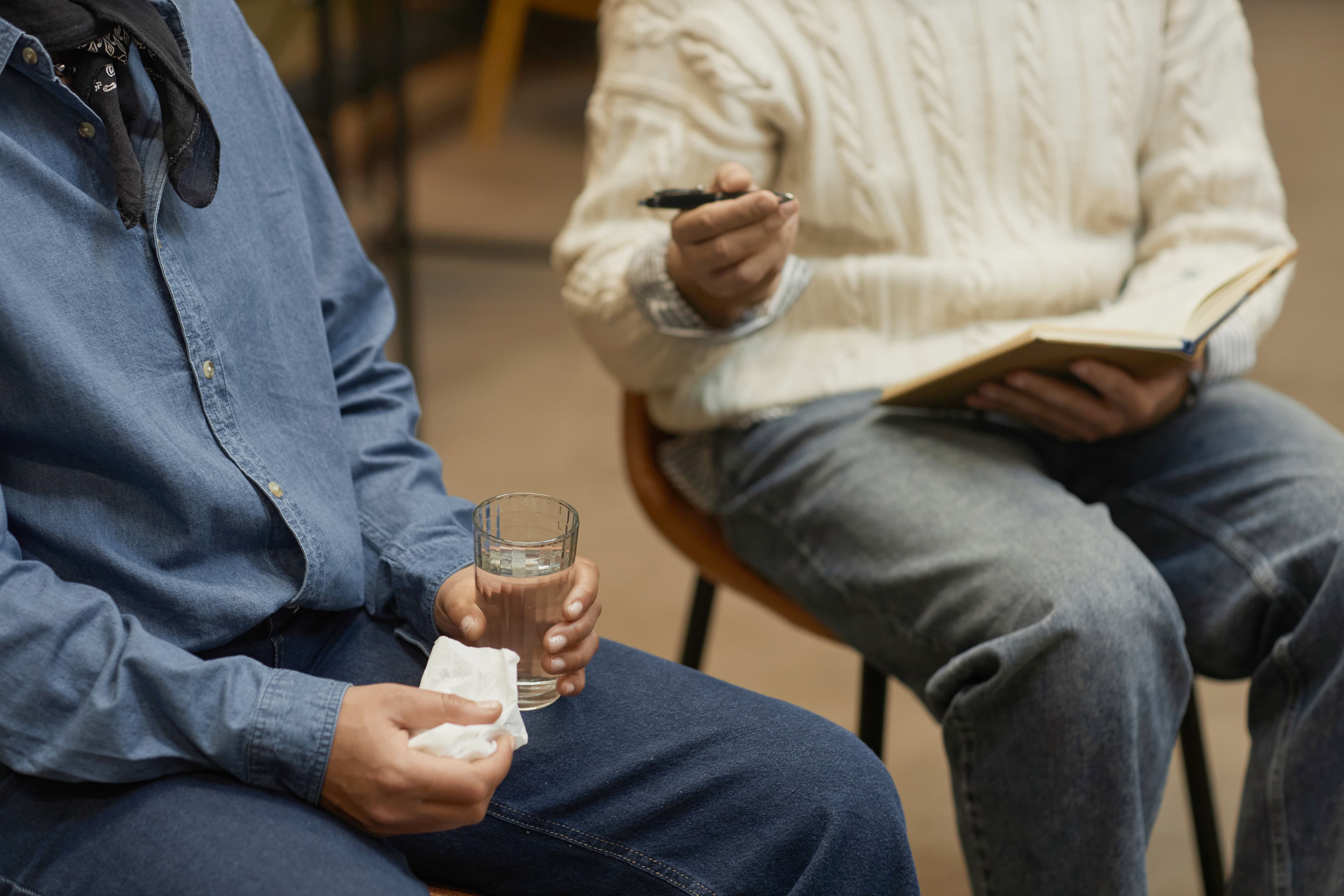
Narcissistic abuse recovery · Florham Park, NJ
The slow recovery of your own perception.
Long-form work for adults recovering from a narcissistic relationship — with a parent, a partner, a workplace — and rebuilding agency, language, and time.
The work
The work is to trust your own read on the room again.
Recovering from a narcissistic relationship is rarely just about the other person. It is about the parts of you that learned to stop trusting your own perception, your own preferences, and your own anger. We name what happened, in the language it actually requires, and build from there.
I also work with adults whose own personality and impulse-control patterns have started to feel like obstacles — to relationships, to careers, to the kind of life they want. Treatment proceeds carefully and without judgment, because most of these patterns were intelligent solutions to earlier problems.
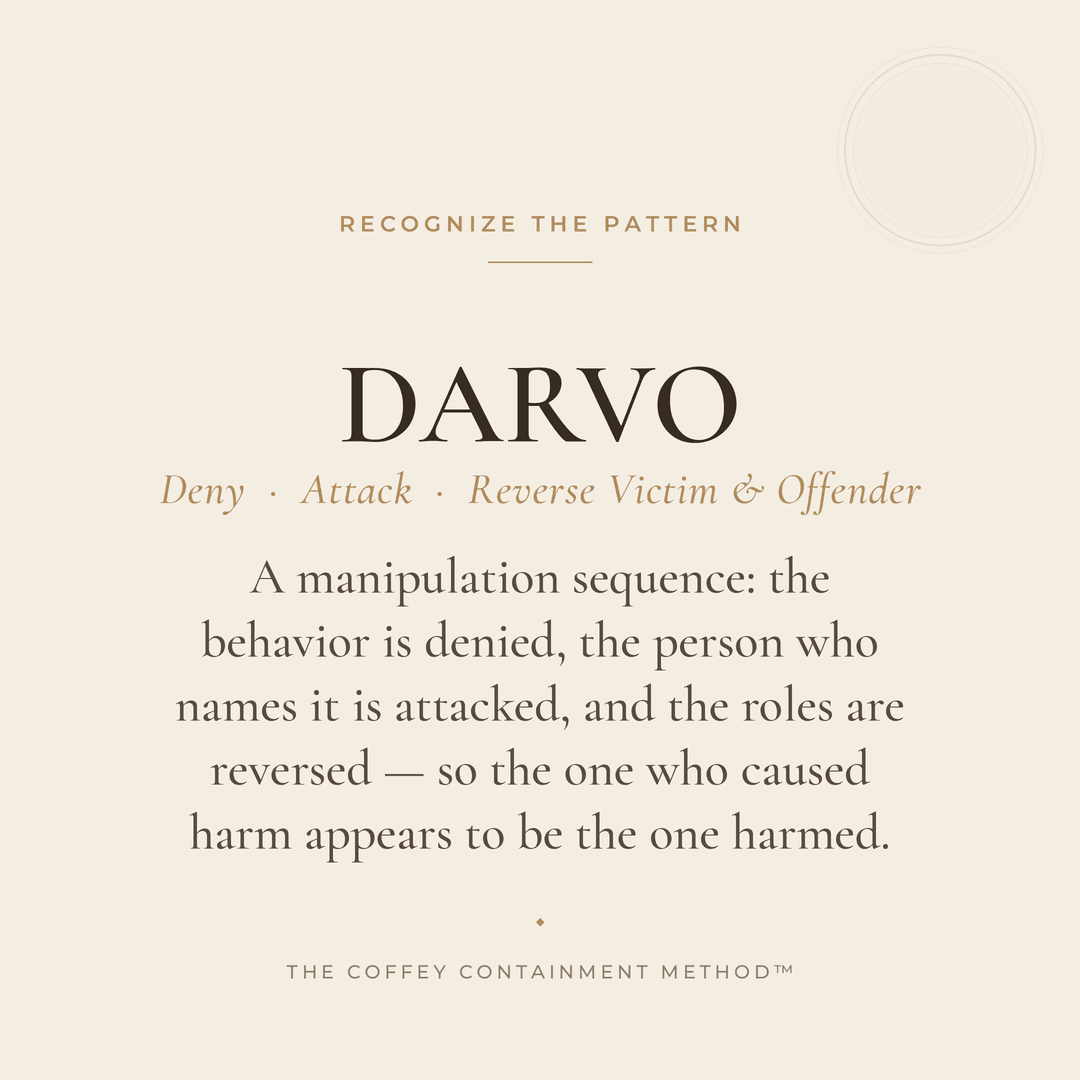
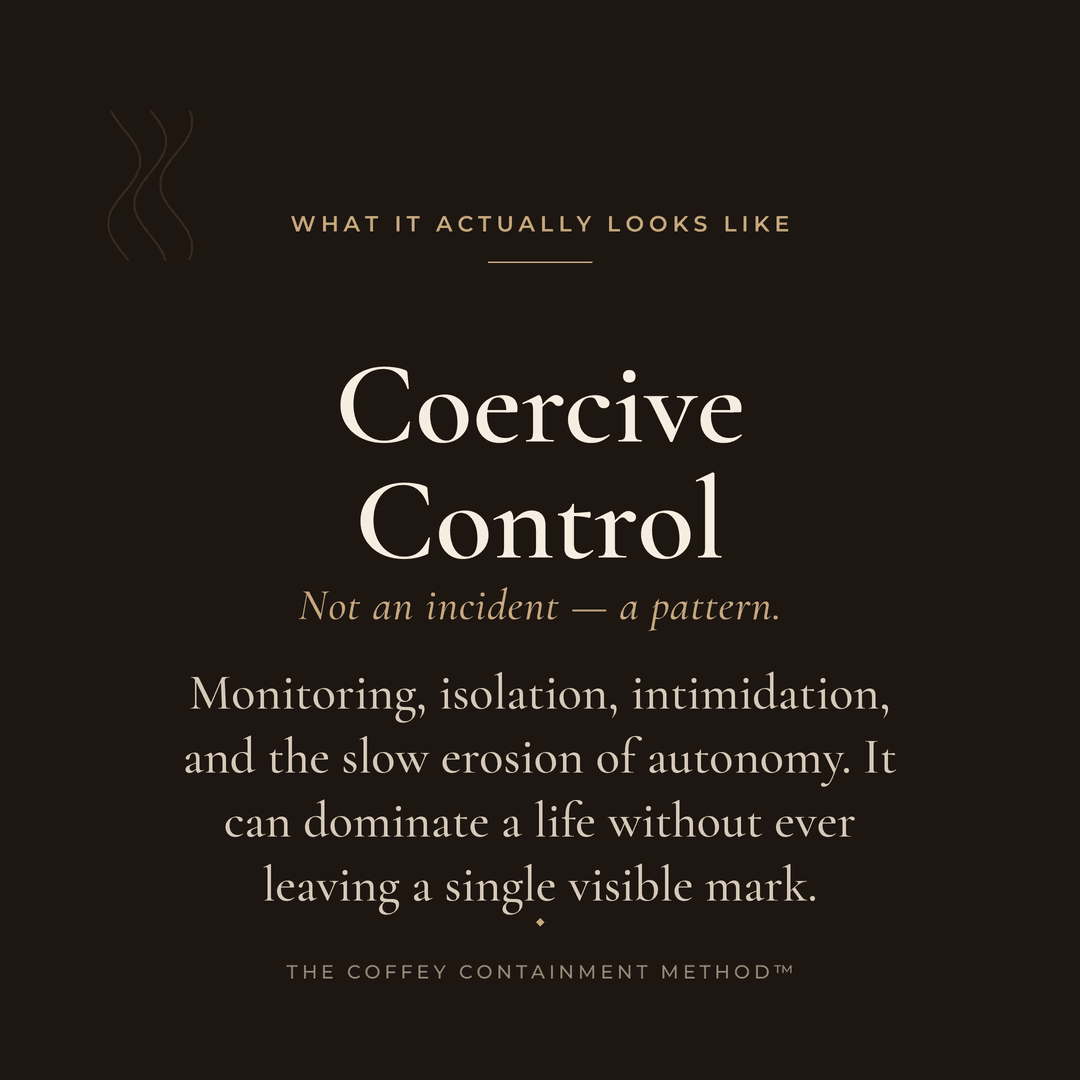
Many people in this work have experienced coercive control — a pattern of domination and manipulation that does not always involve physical violence but systematically dismantles a person’s sense of reality, autonomy, and trust in their own perception. I also work with the specific dynamic of DARVO: Deny, Attack, Reverse Victim and Offender — where the person who caused harm repositions themselves as the victim when confronted. If you have been told that your reactions to mistreatment are the real problem, that naming may itself be the beginning of the work.
When this is the work
When the work is recovery.

Naming what happened.
The first work is often language. Finding accurate words for an experience that was systematically renamed can take months — and is itself part of the healing.

Recovering perception.
The clinical work is to slowly restore trust in your own read on the room — what you think, what you feel, what is actually happening — without the constant second-guessing that the relationship trained.

Time, agency, and the next relationship.
Late-stage work is the rebuilding of agency over your time, your money, your relationships, and the long question of what (if anything) you want from the person who hurt you next.

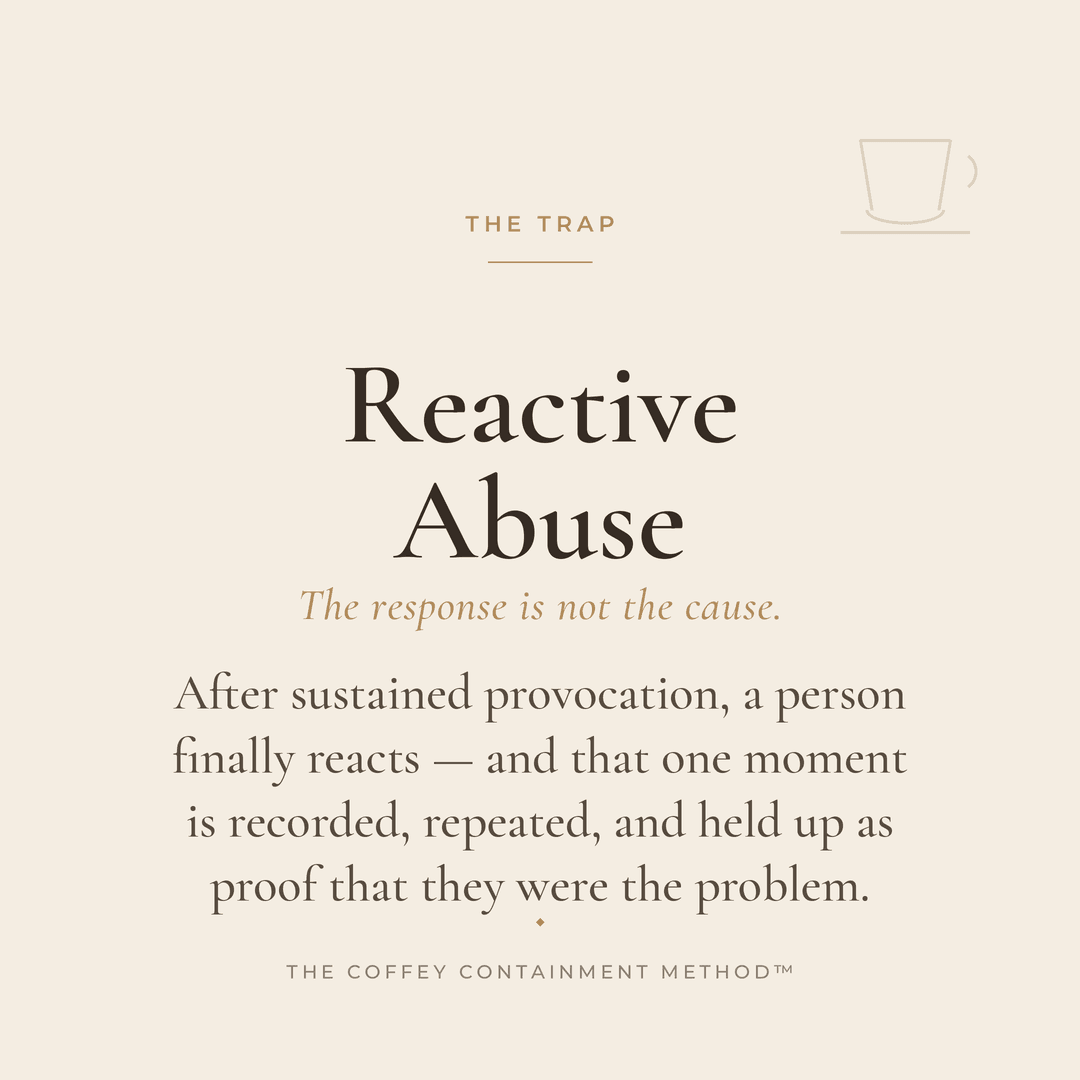
Reactive abuse.
Reactive abuse is one of the most damaging and least discussed dynamics in coercive relationships — and one of the most frequently weaponized in legal settings. When you have been provoked into reacting and that reaction has been used as evidence that you are the abusive one, we name it for what it is. Your reaction does not make you the abuser. The provocation does not become your fault because you eventually responded to it.
What to expect with abuse-recovery work.
Slower, more deliberate than other clinical work. We move at a pace that does not re-create the dynamic.
- 01
A free 15-minute call.
A brief, low-pressure phone conversation. You decide how much, or how little, to say.
- 02
An initial session.
Unhurried. We talk about what brought you in, the relationship in question, and what you are looking for from the work.
- 03
Ongoing sessions.
Typically weekly through the early phase. Most of this work is multi-year. Length and cadence are decided together, throughout.
“The eventual goal is your own life, your own time, your own clear read on the room.”